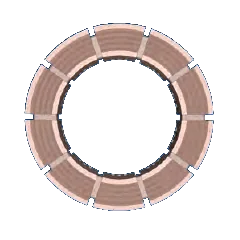
W3 mm
Standard wide path, generally for softer ground or where cuttings flushing is less critical.

PRODUCTS / WATERWAY SELECTION
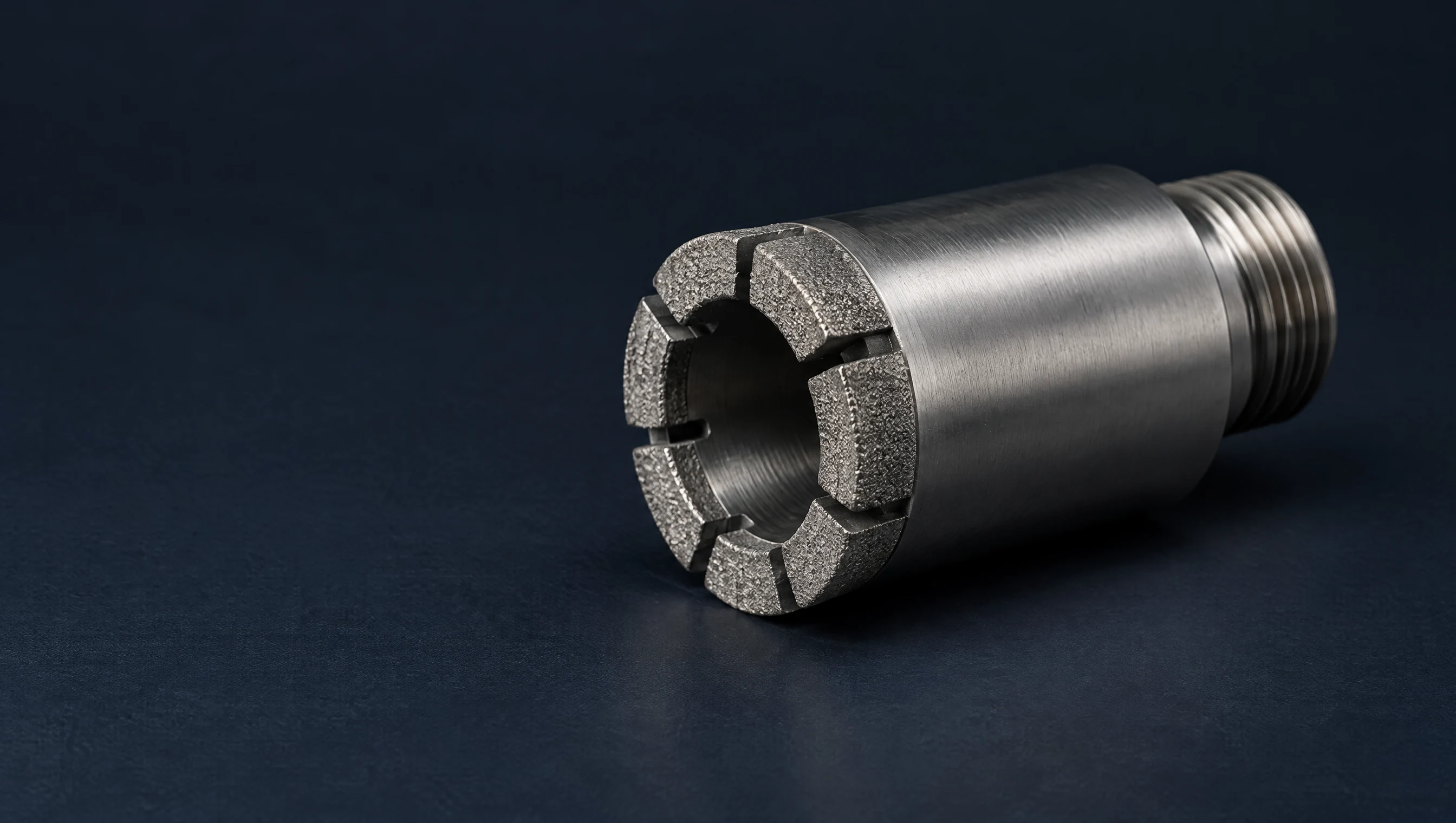
Flow path changes flushing, cuttings removal and the pressure experienced at the core. Compare the geometries and build the right combination for the ground.
Compare formation, drilling fluid, cuttings and core recovery needs when selecting the flow path through the crown.
Standard wide path, generally for softer ground or where cuttings flushing is less critical.

Wider path for additional cuttings flushing in hard formations.
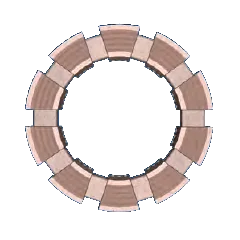
The widest cataloged option when bit-face flushing is especially important in hard ground.
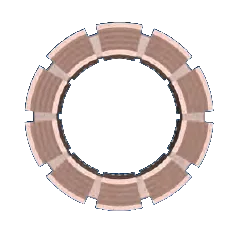
Tapered from 3 mm at the inner diameter to 6 mm at the outer diameter; cataloged for harder ground.
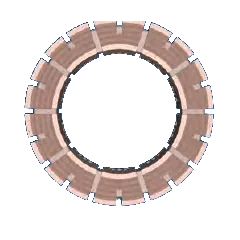
Turbo-wide geometry for solid or slightly broken formations and small to medium cuttings.
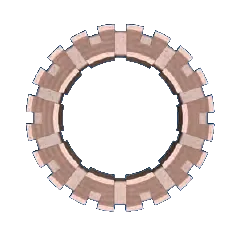
Wider outer-diameter turbo channels for slightly broken or broken ground and larger cuttings.

Cross-turbo paths at both inner and outer diameters for flushing and gauge protection in broken ground.

Vortex arrangement described for softer formations to reduce pressure at the borehole wall.
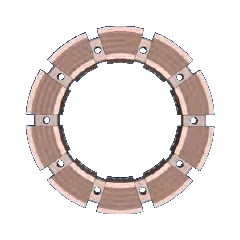
Face-discharge path described where lower pressure at the core face can help limit core loss.
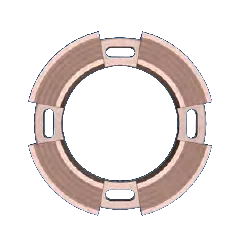
Slotted face discharge with the catalog’s stated advantage for higher-viscosity drilling fluids.
ORE DYNAMICS / WATERWAY SELECTION
A wider waterway may improve removal of cuttings, but it also changes the cutting surface available at the crown. Turbo, tapered, vortex and face-discharge arrangements direct fluid differently.
The catalog illustrations below show the geometry of each option. Compare them with the formation, drilling fluid and core recovery objective to understand which circulation path makes sense.
THE NEXT CHALLENGE
Share the ground conditions, hole size and equipment you use. We can help narrow down the right components.